
Begin with the verified combat loop
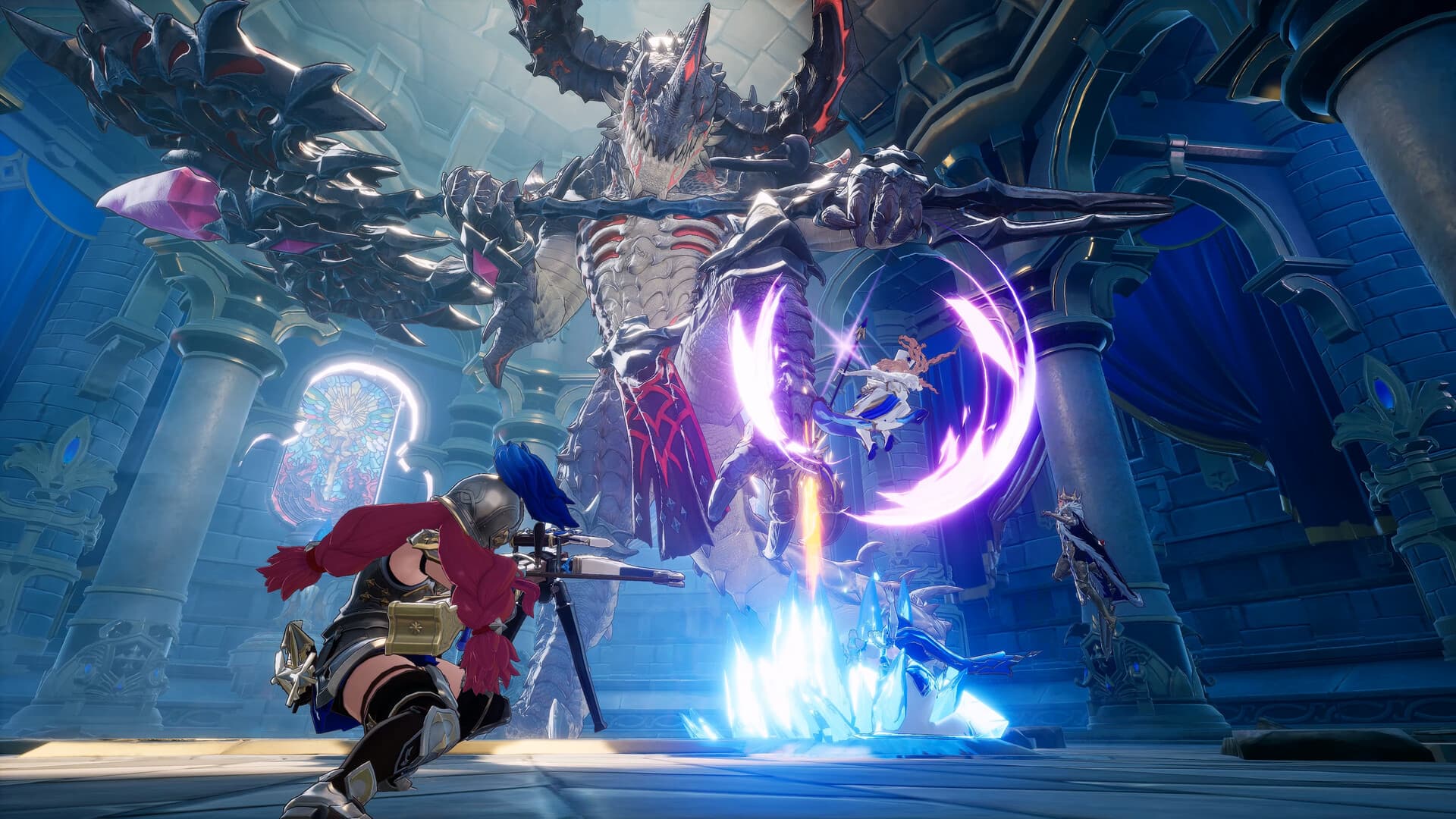
The official Steam description gives a useful team-building skeleton: heroes use Active Skills to stack Status Ailments, switching opens different actions, and Signal Skills can continue the chain. It also says the nineteen heroes have distinct Status Ailment abilities. Those statements support a method—look for setup and follow-up—but they do not identify which named hero fills each slot. This guide therefore avoids publishing a supposedly optimal trio without individual skill evidence.
Party size is also left unverified. Search wording and familiar action-RPG conventions are not proof of how many heroes a player equips, controls, or brings into every mode. The worksheet below uses functional slots rather than a fixed headcount. Apply it only to the number of active or selectable heroes confirmed in your current build, and record mode differences rather than assuming story, exploration, and online co-op share an identical structure.
Record setup, trigger, and follow-up separately
Start by writing down the exact condition an Active Skill applies, including any duration or target requirement visible in the game. Next, identify what action consumes or reacts to that condition. Finally, record the Signal Skill prompt and the field-time cost of reaching it. A useful composition is not simply three individually popular heroes; it is a chain whose steps can occur reliably in the encounter being tested without one member waiting for an unsupported assumption.
Substitutes should match function, not just a broad label such as damage or support. If a replacement applies a different ailment, changes timing, or requires a different trigger, it creates a new composition that needs its own test. Note failure cases as carefully as successes: immune targets, interrupted setup, slow resource recovery, or a Signal window that expires. This keeps the guide practical while individual character mechanics remain openly unresolved in the current source set.
What a verified team entry will require
A future lineup row will name the game version, mode or encounter, every hero used, the observed setup sequence, the Signal follow-up, and at least one meaningful substitute or limitation. It will be labeled editorial unless an official source describes the composition directly. A community report can point toward a test, but one unspecific recommendation cannot establish a universal best team. Conclusions must remain narrower than the evidence that produced them.
Until that work is recorded, use character pages as checklists rather than build sheets. Their unverified weapon, role, affinity, and status fields prevent the roster name alone from masquerading as a mechanical fact. The tier-list guide follows the same rule and publishes no placements. Together, the pages show how to investigate a team without inventing its members: verify the status chain first, then decide whether the resulting rotation is dependable enough to recommend.
Composition verification checklist
- Name the tested build, mode, and encounter.
- Record the exact setup condition and the hero that applies it.
- Record the trigger, Signal follow-up, and observed timing.
- List limitations and substitutes only after testing them.
Unfilled composition worksheet
Scroll horizontally to view every column.
| Function | Hero | Observed action | Evidence |
|---|---|---|---|
| Status setup | Not yet verified | Not yet verified | Pending |
| Trigger | Not yet verified | Not yet verified | Pending |
| Signal follow-up | Not yet verified | Not yet verified | Pending |